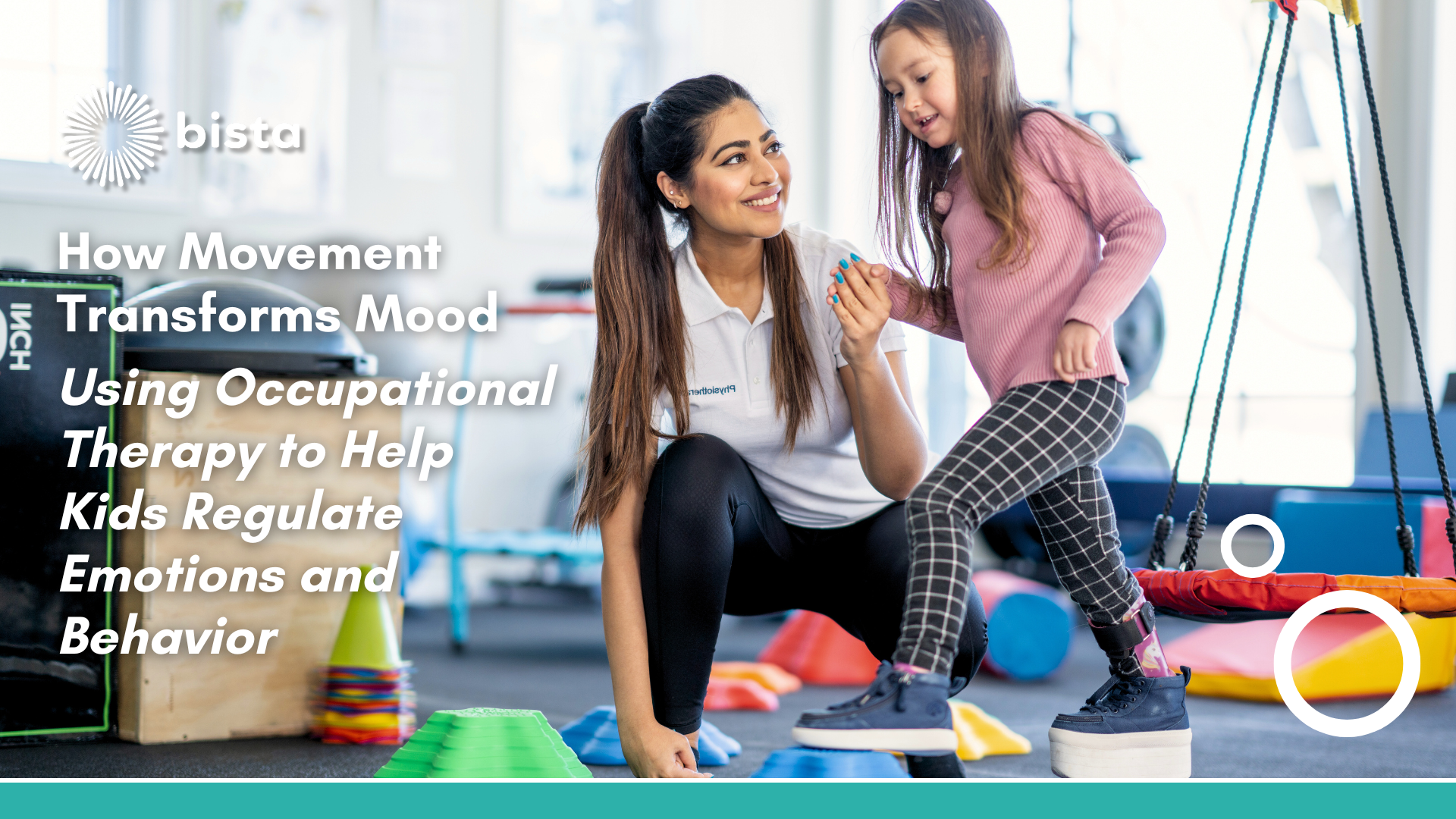
As a parent, you’ve likely seen it: the child who needs to spin or jump to calm down, or the one who fidgets intensely before they can focus. These are often physical attempts by a child to regulate their own nervous system.
At Bista, we understand that emotions and behavior aren’t just “in the mind.” They are deeply connected to the body and how it processes sensory information. This is the heart of how Occupational Therapy (OT) uses movement to help children develop emotional regulation and positive behaviors.
The Foundation: Sensory Processing and Regulation
To understand how movement helps, we first need to look at sensory processing. Our bodies constantly take in information through eight sensory systems, including the familiar five (sight, smell, touch, taste, hearing) plus three crucial internal senses:
- Vestibular (Movement/Balance): Tells us where our head and body are in space and relates directly to balance and spatial awareness.
- Proprioceptive (Body Position): Comes from muscles and joints, telling us where our limbs are and how much force to use (e.g., how hard to hold a pencil).
- Interoception (Internal Body State): Helps us feel hunger, a racing heart, or needing to use the restroom—it’s the internal signals that drive our emotional awareness.
When a child has difficulty processing this sensory input—which is common in children with autism and other developmental differences—their nervous system can become over-stimulated (leading to anxiety, hyperactivity) or under-stimulated (leading to lethargy, difficulty focusing).
Movement is the natural tool for adjusting this internal volume dial.

OT Strategies: Purposeful Movement for Regulation
Occupational Therapists specialize in identifying a child’s unique sensory needs and creating targeted “sensory diets”—not food, but specific movement activities planned throughout the day to keep their nervous system in that “just right” state for learning and engaging.
Here are the specific types of movement OT utilizes for regulation:
- Heavy Work (Proprioceptive Input)
- What it is: Activities that push or pull against the muscles and joints, providing deep, calming input. This input is generally grounding and helps an over-aroused child feel more secure and organized.
- Examples: Pushing a heavy laundry basket, carrying a stack of books, pulling a wagon, climbing, or wearing a weighted vest (under therapist guidance).
- How it helps regulation: Heavy work provides strong feedback to the brain, which can help “reset” a nervous system that is in emotional overdrive. It is fantastic for reducing hyperactivity and improving focus.
- Rhythmic and Linear Movement (Vestibular Input)
- What it is: Slow, predictable, side-to-side or linear movement.
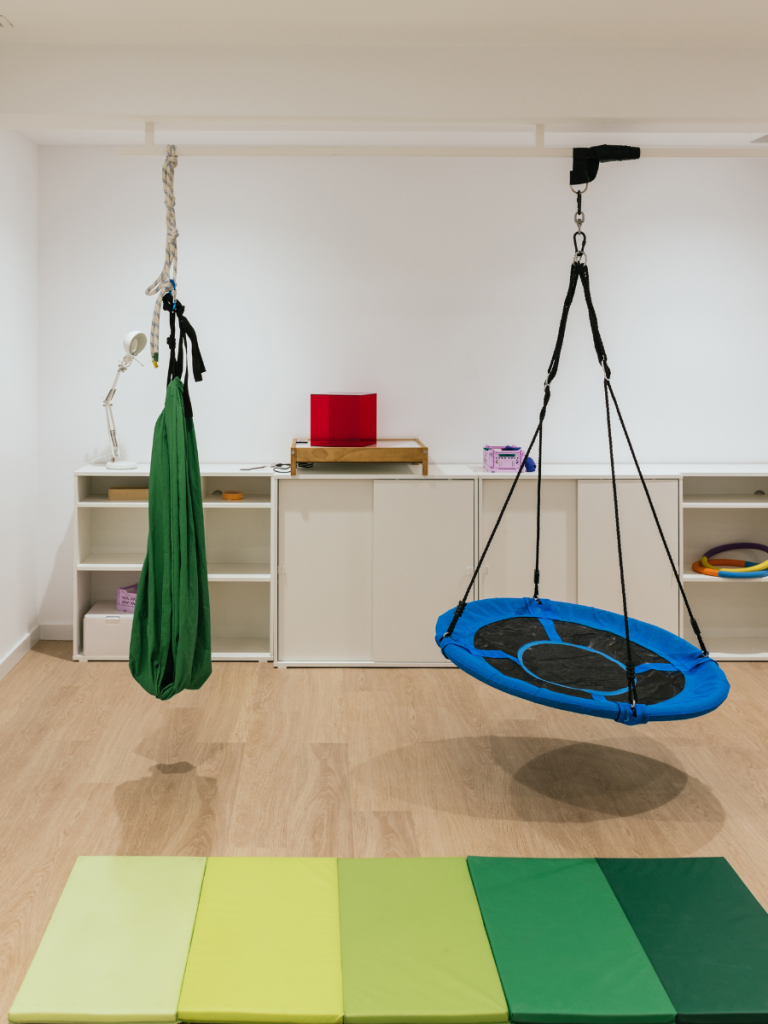
- Examples: Slow, rhythmic swinging, rocking in a rocking chair, or gently gliding on a scooter board.
- How it helps regulation: Rhythmic movement is incredibly soothing and helps calm an anxious or upset child. Think of how we naturally rock a baby—it organizes the vestibular system and promotes emotional security.
- Alerting and Rotary Movement (Vestibular Input)
- What it is: Fast, rotational, and unpredictable movement.
- Examples: Spinning (safely!), fast swinging, or changing direction quickly.
- How it helps regulation: For a child who is sluggish or having trouble waking up or focusing, this input is alerting. It wakes up the nervous system, preparing the brain for attention and learning.
Integrating ABA and OT: The Bista Advantage
At Bista, we believe in a holistic, multi-disciplinary approach. While Applied Behavior Analysis (ABA) focuses on the function of behavior and teaching new skills, our Occupational Therapy team ensures the child’s body is ready to learn and engage.
Our BCBAs and OTs collaborate closely:
- If an ABA therapist observes that a child’s inability to sit still is interfering with learning, the OT can integrate a heavy work break (like pushing the therapy ball across the room) into the ABA session to meet that child’s sensory need first.
- If a child is prone to emotional outbursts (meltdowns), the OT helps the ABA team identify proactive sensory strategies (e.g., a movement break before a known challenging transition) to keep the child regulated and prevent the behavior from occurring.
Partnering With Bista’s Occupational Therapy Team
If you suspect your child’s behavioral or emotional challenges are connected to how they process the world around them, Bista can help. Our expert Occupational Therapists specialize in developing sensory-motor programs that use the power of movement to transform regulation, focus, and emotional well-being.
Contact Bista today to learn how our multi-disciplinary team, featuring both ABA and OT, can create a personalized path to independence and regulation for your child.
Every child is unique, and these tips may look different depending on your child’s preferences and needs. This content is for general informational purposes and is not intended as specific medical or therapeutic advice.